Coaching Evaluation

Collect meaningful feedback after coaching engagements

Coaching is personal, confidential, and hard to evaluate from the outside. A well-designed coaching feedback survey gives sponsors evidence of impact and gives coaches actionable data to improve their practice, without compromising the coaching relationship.
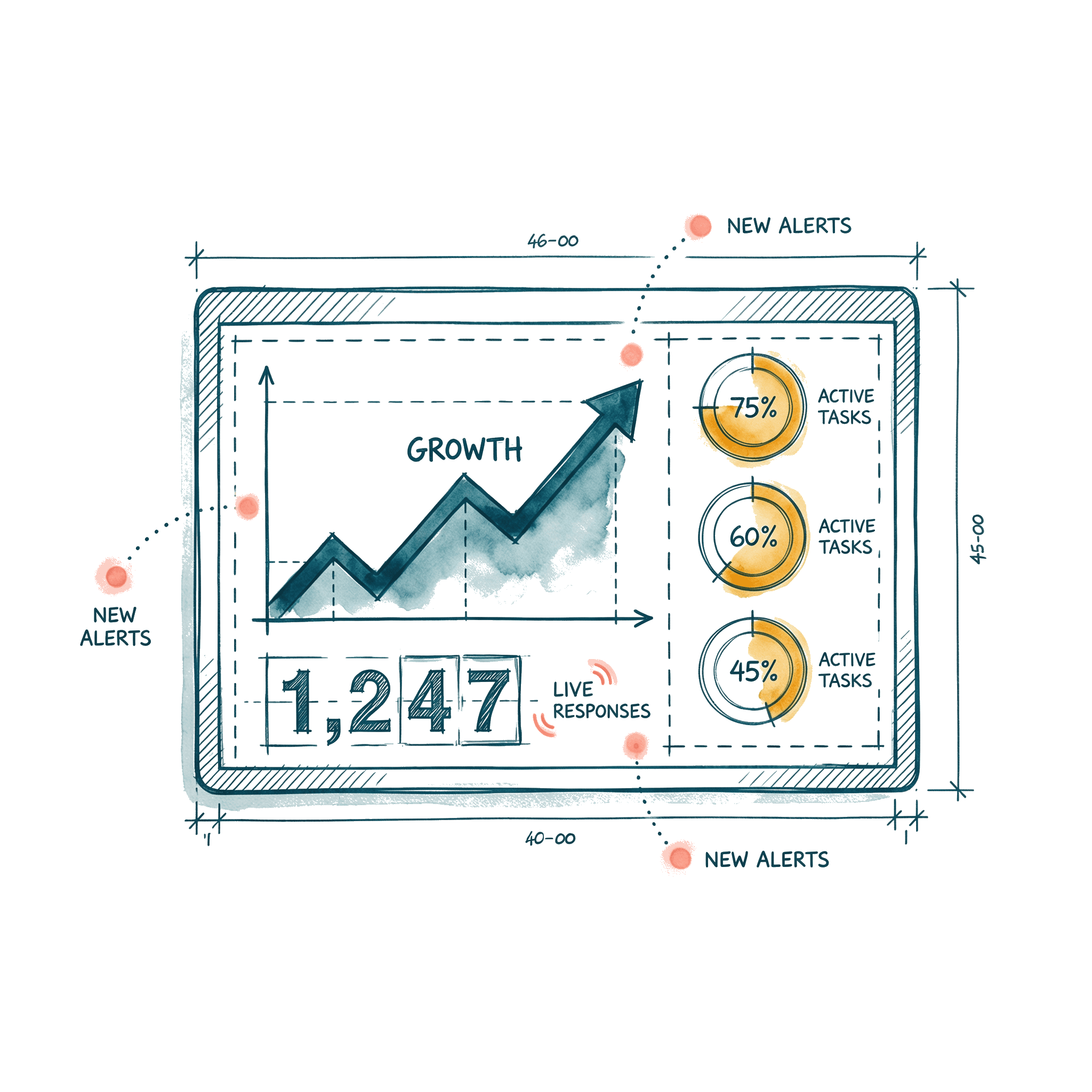
Coaching feedback survey results dashboard

Why coaching feedback is different from program evaluation

A leadership development program has a curriculum, a cohort, and a fixed timeline. Coaching is none of those things. It is a one-to-one relationship, often running for months, with goals that evolve as the engagement progresses. The feedback tool needs to reflect that.

Three things that make coaching evaluation distinct

  • The relationship matters. In a workshop, facilitator style is one factor among many. In coaching, the relationship is the intervention. Feedback needs to capture the quality of that relationship without reducing it to a satisfaction score.
  • The engagement is ongoing. Programs have a clear end date. Coaching engagements are often evaluated at checkpoints, not just at completion. Your survey tool needs to work for mid-engagement reviews as well as final evaluations.
  • There are multiple stakeholders. The coachee experiences the coaching. The sponsor pays for it. The coach delivers it. Each has different questions about whether it is working, and they rarely need the same data.

Generic training evaluation forms miss these nuances. A coaching feedback survey needs to be designed specifically for the dynamics of a coaching engagement.

What sponsors want to know vs. what coaches want to know

The person paying for coaching and the person delivering it are asking fundamentally different questions. A good evaluation addresses both.

Sponsors want to know

  • Did the coachee make progress on the agreed goals?
  • Is the investment producing visible behavior change?
  • Should we continue or expand the coaching engagement?
  • How does this coach compare to others we have engaged?

Sponsors think in terms of ROI, accountability, and organizational outcomes.

Coaches want to know

  • Did the coachee feel the sessions were valuable?
  • Was the coaching relationship experienced as safe and productive?
  • What is working well and what should I adjust?
  • Can I use aggregate feedback to demonstrate my effectiveness to prospective clients?

Coaches think in terms of relationship quality, professional development, and evidence of impact.

ImpactCheck lets you build surveys that serve both audiences. Scale questions give sponsors the quantitative data they need. Open-ended questions give coaches the qualitative insight that helps them improve. The same survey, one set of responses, two useful perspectives.

When to use standard vs. retrospective surveys for coaching

The right survey type depends on the length and purpose of the coaching engagement. There is no single correct approach, but there is a straightforward decision rule.

Single session or short engagement

Use a standard post-coaching survey.

  • 1-3 coaching sessions
  • Workshop-style group coaching
  • Initial chemistry or discovery sessions

You are measuring reaction: Was the session useful? Was the coach a good fit? Would you recommend this coach?

Multi-session engagement

Use a retrospective survey.

  • 6+ sessions over several months
  • Executive coaching engagements
  • Leadership development coaching tracks

You are measuring behavior change: How has the coachee's confidence, skill, or approach shifted since coaching began?

For longer engagements, the retrospective (post-then-pre) method captures change more accurately than asking coachees to remember how they felt months ago. Both ratings happen in one sitting, using the same frame of reference.

ImpactCheck supports both modes. Retrospective is a toggle you enable per survey. When it is on, each scale question asks participants to rate "before coaching" and "now" side by side.

Sample post-coaching feedback questions

These are realistic examples you could include in a coaching evaluation survey. Adapt the wording to match the goals of the specific engagement.

Scale

"My coach created an environment where I felt safe to be open and honest."

Measures relationship quality. This is the foundation everything else depends on.

Scale

"I made meaningful progress toward the goals we set at the start of the engagement."

Measures goal achievement. Works well as a retrospective item for longer engagements.

Scale

"I have applied insights from coaching to real situations at work."

Measures application and transfer. This is what sponsors care about most.

Scale

"The coaching sessions were a valuable use of my time."

Measures perceived value. Simple, direct, and easy for the coachee to answer honestly.

Scale

"I would recommend this coach to a colleague."

Net promoter-style question. Useful for comparing coaches across an organization's coaching panel.

Open

"What was the most valuable thing you took away from coaching?"

Open-ended. Gives the coach qualitative insight and provides sponsors with concrete examples of impact.

In ImpactCheck, you can mix scale questions and open-ended questions in a single survey. Drag and drop to reorder. Start with the scale items to get quantitative data, then close with one or two open-ended questions for depth.

Track outcomes by coach without breaking anonymity

When an organization uses multiple coaches, sponsors need to compare outcomes across the panel. But coachees need to feel safe being honest. These two needs are in tension, and the survey design has to handle it carefully.

ImpactCheck uses facilitator attribution to solve this. Each coach gets a unique survey link. Responses are tagged to the coach automatically, but coachees are never identified. No names, no emails, no IP addresses, no device fingerprints.

How it works

  1. You create a coaching feedback survey with the questions you need.
  2. You add each coach as a facilitator in your account.
  3. ImpactCheck generates a unique link for each coach. The coach shares their link with their coachees.
  4. Responses are attributed to the coach, but the coachee remains completely anonymous.
  5. You can view results by coach or in aggregate across all coaches.

Why this matters for coaching

  • Honest feedback. Coachees are more candid when they know they cannot be identified. This is especially important in coaching, where the relationship is personal.
  • Coach-level reporting. Sponsors can see how each coach performs on key metrics. Coaches can see their own aggregate feedback over time.
  • Panel management. Organizations running coaching panels can make data-informed decisions about which coaches to continue engaging.
  • Simple distribution. Each coach just shares their link. No need to manage lists, assign coachees, or coordinate distribution centrally.

Create your first coaching feedback survey

Set up a coaching evaluation in minutes. Add your questions, assign coaches as facilitators, and start collecting feedback that serves both coaches and sponsors.

Create your free account

Free to use. No credit card required.