Program Evaluation

Post-program evaluation surveys that measure what actually changed

Satisfaction scores tell you if participants enjoyed a program. They don't tell you if it worked. A well-designed post-program evaluation survey measures confidence, behavior change, and real-world application, giving your clients evidence of impact, not just attendance.
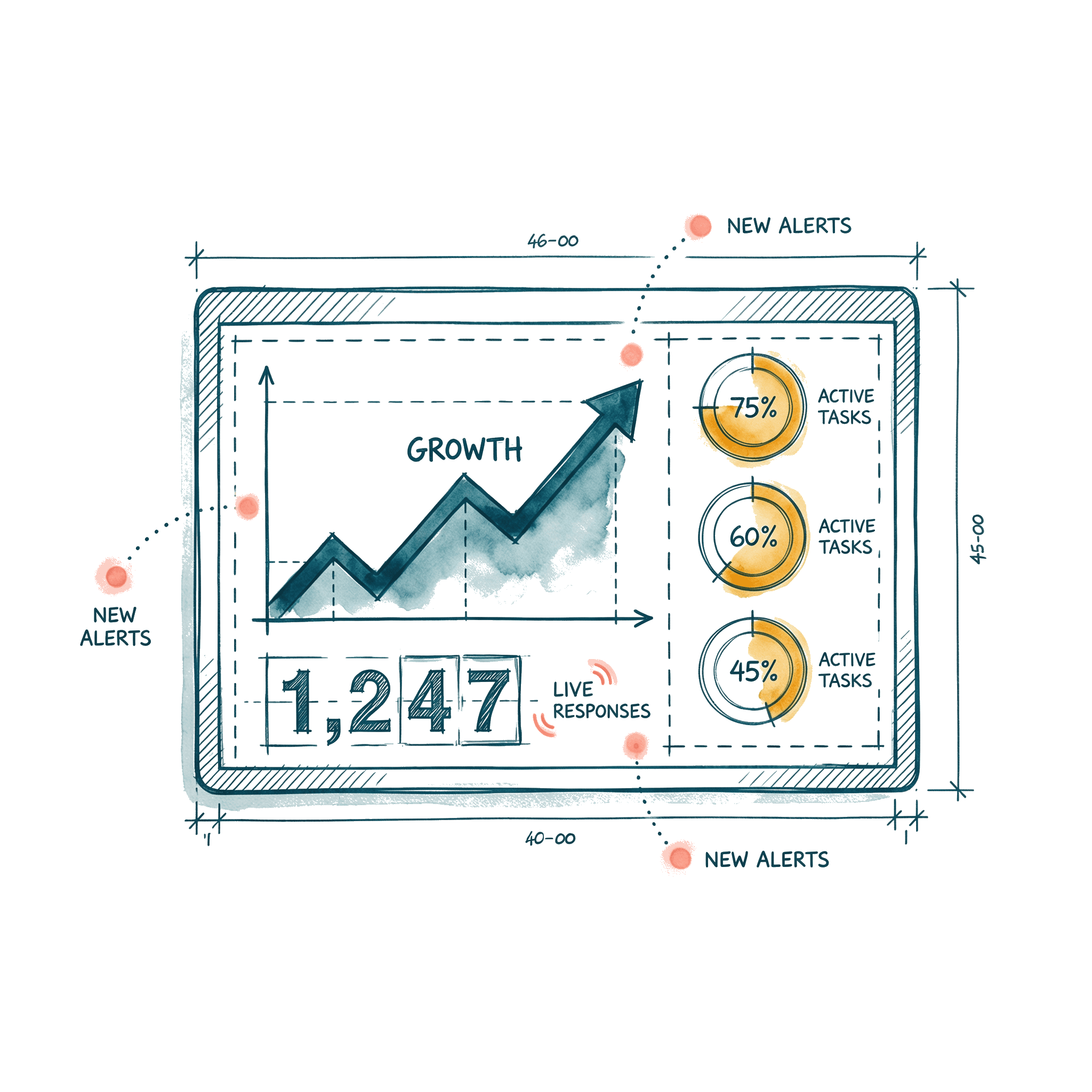
Post-program evaluation survey results dashboard

Why post-program evaluation matters

Most training evaluation stops at "How would you rate this session?" That captures reaction, which is Level 1 of the Kirkpatrick evaluation model. It's the easiest data to collect and the least useful data to report.

Clients who invest in leadership development, coaching programs, or management training want to know whether the investment produced results. Did participants learn something new? Are they applying it? Has their behavior changed? These are Kirkpatrick Levels 2 and 3, and they require different questions than a satisfaction survey.

A post-program evaluation survey bridges this gap. It asks participants to reflect on what changed, not just whether they had a good time. The result is data you can put in front of a client or stakeholder that speaks to return on investment, not just return on attendance.

The ROI conversation has shifted

L&D budgets face more scrutiny than ever. "Participants rated the workshop 4.5 out of 5" is no longer sufficient. Stakeholders want to see evidence that programs change behavior and improve performance.

Post-program evaluation surveys generate that evidence. When you can report that participant confidence in giving feedback increased by 1.4 points on a 5-point scale, or that 78% of participants are applying a new framework in their daily work, you're speaking the language that justifies continued investment.

What to measure in a post-program evaluation

Effective post-program evaluation moves beyond "did you enjoy it" to three categories of impact that matter to stakeholders.

Confidence

Do participants feel more confident in the skills the program targeted? Confidence is a leading indicator of behavior change. If someone doesn't believe they can do something differently, they won't.

Kirkpatrick Level 2 (learning)

Application

Are participants actually using what they learned? Application questions ask whether new skills, frameworks, or approaches are showing up in participants' day-to-day work.

Kirkpatrick Level 3 (behavior)

Behavior change

Has the program produced observable changes in how participants lead, communicate, or make decisions? This is the hardest to measure through self-report, but even perceived change is more valuable than satisfaction data.

Kirkpatrick Level 3 (behavior)

You can still include a reaction question or two (overall satisfaction, likelihood to recommend). But the core of a post-program evaluation should focus on these three areas. They're what differentiate a program evaluation from a feedback form.

Choosing the right question types

The questions you ask matter, but so does how you ask them. Different question types serve different purposes in a post-program evaluation.

Scale questions for measurable data

Likert-type scales (e.g., 1-5 agreement or frequency scales) produce quantitative data you can average, compare across cohorts, and track over time. They're the backbone of any evaluation that needs to demonstrate measurable change.

Use scales for confidence, frequency of application, and perceived behavior change. Choose labels that match what you're measuring: "Strongly Disagree to Strongly Agree" for beliefs, "Never to Always" for behaviors, "Not at all Confident to Extremely Confident" for self-efficacy.

Open text for qualitative insight

Numbers tell you how much changed. Open-ended questions tell you what changed and why. A response like "I used the feedback framework from session 3 in my last two one-on-ones and both went better than usual" is the kind of evidence that makes a client report compelling.

Limit open-text questions to 2-3 per survey. Too many and completion rates drop. Place them after the scale questions so participants have already reflected on specific areas before writing.

The retrospective option for before-and-after measurement

For programs where you want to measure the degree of change, retrospective (post-then-pre) surveys ask participants to rate both where they are now and where they were before the program, using the same scale. This produces a shift score that quantifies perceived change for each question.

Retrospective mode is especially valuable for multi-session programs, coaching engagements, and any intervention where the goal is sustained behavior change over time. It eliminates the need for a separate pre-program survey while producing more accurate self-report data.

Sample post-program evaluation questions

These are realistic questions from a leadership development program evaluation. Adapt them to match your program's specific learning objectives.

I am confident in my ability to have difficult conversations with direct reports.

5-point scale: Not at all Confident to Extremely Confident

Confidence

I regularly use a structured framework when giving feedback to my team.

5-point scale: Never to Always

Application

I adapt my leadership approach based on the needs and development level of each team member.

5-point scale: Strongly Disagree to Strongly Agree

Behavior

I proactively seek input from my team before making decisions that affect them.

5-point scale: Never to Always

Application

I am confident in my ability to coach team members through performance challenges.

5-point scale: Not at all Confident to Extremely Confident

Confidence

What is one specific thing you have done differently as a result of this program?

Open text response

Open text

Notice the pattern: confidence questions establish self-efficacy, application questions check for real-world use, behavior questions assess sustained change, and the open-text question captures specific examples. Together, they build a complete picture of program impact that goes well beyond "I enjoyed the workshop."

Create your first post-program evaluation survey

ImpactCheck makes it straightforward to build evaluation surveys that measure confidence, application, and behavior change. Add your branding, choose your scales, and share a link with participants.

Create your free account

Free to use. No credit card required.